
The first ten minutes after it stops
When a machine stops with a stack of panels waiting behind it, the temptation is to start pulling covers off and having a go. Please don't, at least not yet. The most useful thing anyone can do in those first few minutes is notice and record what happened, because what the machine was doing just before it stopped is one of the best clues there is, and it's easily lost once three people have tried restarting it.
So before anything else, photograph whatever's on the screen, alarm code included. If it's still running but doing something wrong, film it on your phone from a safe spot with the sound on, since a motor labouring or air hissing is worth hearing. Then follow your own lockout routine and leave the inside of the machine alone. Looking and listening is fine. Reaching into units, opening the electrical cabinet or resetting the same trip again and again is an engineer's job, and it's how a fault that could have been simple ends up a lot more expensive.
What to have ready before you ring
We'll ask for the same five things whoever you are and whatever you run, so it helps to gather them before you pick up the phone:
- the make and model, from the badge on the machine
- photos of the problem
- a phone video of the fault happening, if the machine still runs
- any alarm codes
- what it's doing, in your own words
That last one is worth a minute's thought. "It started leaving the edging loose at the back end of every panel after lunch" tells an engineer far more than "the edging's gone wrong", because it narrows down where to look before anyone's touched a spanner.
Edgebander breakdown repair often starts on a remote call
Not every breakdown needs someone driving across the country to your factory. On a remote support call we go through the photos, the video and the codes with whoever looks after the machine, operator or maintenance lead, and we talk it through together while they're stood beside it. It's £95 plus VAT for 45 minutes. If we can't crack it inside the 45 minutes, £45 comes off the cost of the visit, so part of what you spent goes towards getting it fixed in person.
It's a particularly good fit when the fault comes with a code or an alarm message, because the code itself narrows the search before anyone travels. Everything about booking one is on our remote support page.
When it needs an engineer at the machine
When the phone isn't enough, an Edge Assist engineer comes out to the machine, wherever you are in the UK. On site we find the fault, whether it turns out to be mechanical, electrical or pneumatic, make whatever adjustments the machine needs and replace parts that are worn or damaged. If it's down right now, give us a ring and we'll talk through getting an engineer out to you.
Where the fault usually shows itself
It helps to think of the machine in six areas, which is how our fault finder on the home page splits it. Mechanical faults tend to show up on the panel itself. Boards slipping or going skew through the feed, dented or marked faces, or an edge that's firm at one end but coming away at the other all send us to the feed, the pressure beam and the rollers. If the edging stands proud or gets trimmed into the face, the finish comes out rippled and chattery, or the corners look rough where the rounding unit hasn't followed the panel, we look at the trimming and finishing units, and it usually comes down to alignment, calibration, tooling or a worn part.
The glue system has a look all of its own: edging coming away, a heavy, dark line of glue along the joint, or glue in the pot that's burnt, gone stringy or full of lumps.
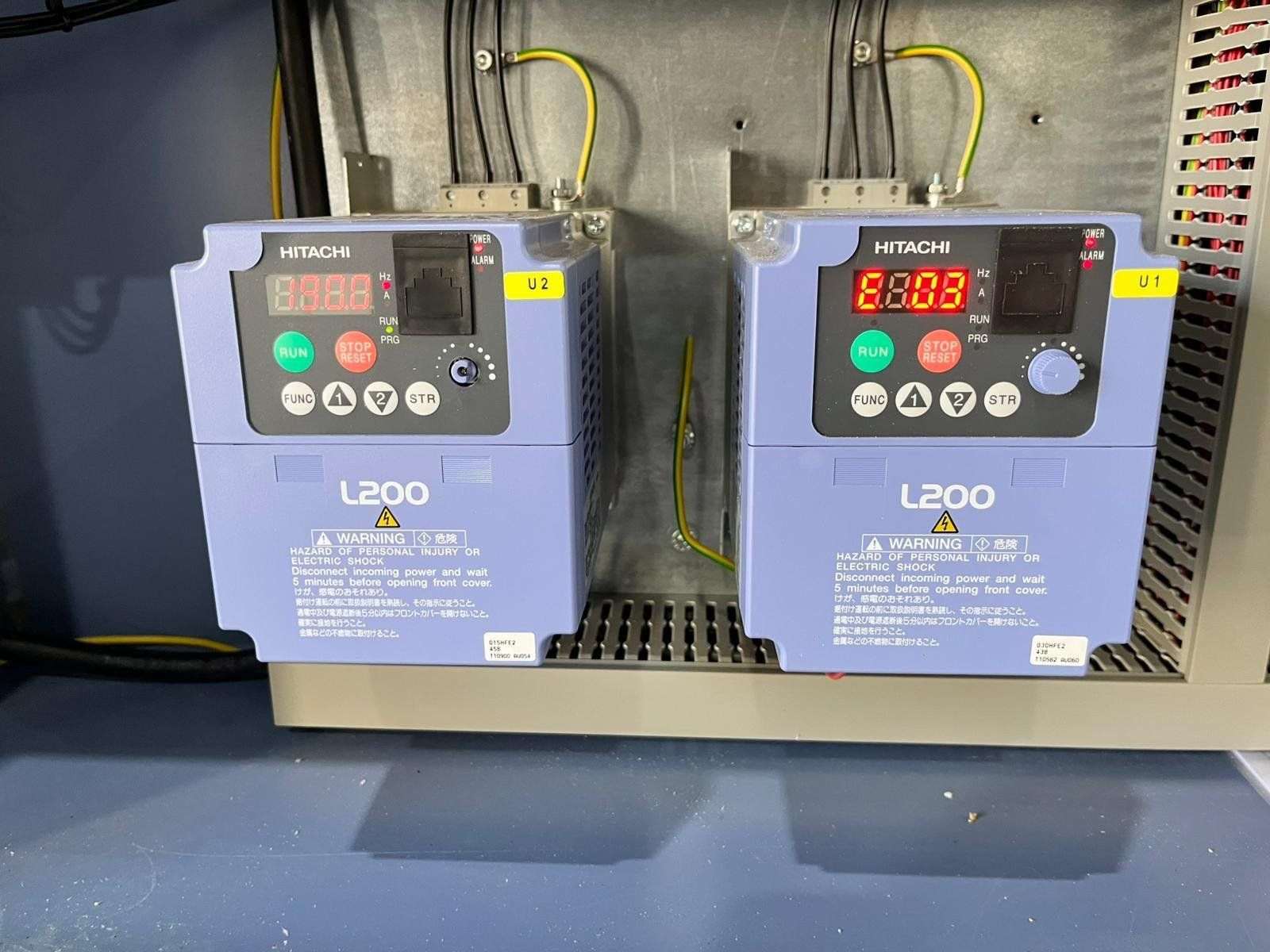
Air and electrical faults are a different story, because they can stop the machine altogether. Units dragging or arriving late, a hiss of escaping air, a sticky cylinder or a sensor that doesn't see the board arrive are pneumatic problems. A motor that trips halfway through a run, a code on the inverter display, or a machine that refuses to start, or starts and then cuts out, takes us to the motors, inverters, contactors and wiring. And an alarm message, settings that keep reverting or units coming in at the wrong moment usually lead back to the controls and set-up, which is exactly where talking the code through with your operator earns its keep.
Which edgebanders we repair
We're independent and edgebanders are all we do. We're not a dealer or agent for any make, so we'll look at most edge banding machines you're likely to have on the floor, Holz-Her, Casadei, Biesse, Homag, SCM, IMA, Hebrock, Cehisa, Nanxing and OAV among them. If yours isn't on that list, ask anyway. You can see some of the machines we've had the covers off in our work.
Ring us, or book the remote call
Edge Assist was set up after two decades working hands-on in woodworking manufacturing, so we know what a stopped edge bander does to a day's production and to the orders behind it. If yours is down, ring 07961 849601 and tell us what it's doing. Or if you'd rather start with someone watching the video and reading the code, book the £95 remote call and we'll take it from there.
